


Introduction
Joker: Folie à Deux was one of the most anticipated sequels in recent film history, following the groundbreaking success of 2019’s Joker. Directed by Todd Phillips and starring Joaquin Phoenix and Lady Gaga, the film aimed to expand on the psychological depth and societal critique of its predecessor. However, its October 2024 release sparked widespread disappointment and backlash, with critics and audiences divided over its bold creative choices. Despite its ambition, Joker 2 faced significant challenges, from controversies surrounding its portrayal of mental illness to its polarizing musical elements, culminating in a mixed legacy.
Creative Risks: Where the Film Divided Fans
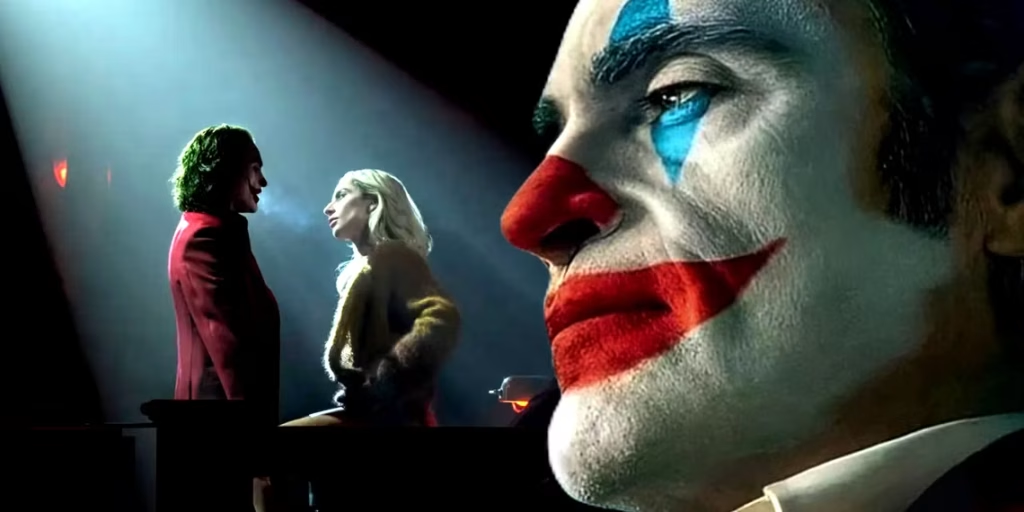
Unlike the grounded realism of the first Joker, Joker: Folie à Deux took a daring leap into surrealism, blending musical numbers with psychological drama. This tonal shift, while praised by some as innovative, alienated many fans of the original film. Lady Gaga’s portrayal of Harley Quinn introduced a flamboyant energy that clashed with the gritty, somber tone established in the first installment. The musical sequences, intended to symbolize Arthur Fleck’s descent into delusion, were criticized as inconsistent and jarring, detracting from the narrative’s emotional weight.
The film also struggled with pacing issues, with some scenes dragging unnecessarily while others felt rushed. Critics pointed out that the sequel lacked the tight, focused storytelling that made the original Joker so impactful. While Phoenix’s performance remained a highlight, even his portrayal couldn’t fully salvage the disjointed narrative. For many, the sequel felt like a misstep that failed to recapture the magic of the first film.
Cultural Backlash and Controversies
Joker 2 faced intense scrutiny leading up to its release, with critics questioning whether the sequel was necessary. The original film’s controversial themes—violence, mental health, and societal decay—sparked debates in 2019, and the sequel only amplified these discussions. Critics argued that Joker: Folie à Deux sensationalized mental illness and glorified toxic relationships, particularly between Arthur and Harley Quinn.
The inclusion of musical elements was another source of contention. While some praised the bold artistic vision, others labeled it as pretentious and disconnected from the original’s tone. Social media platforms were flooded with debates, with fans split over whether the film represented a brave artistic choice or a misguided attempt to innovate. Many viewers who admired the gritty realism of the first film felt alienated by the sequel’s theatricality, leading to accusations of the filmmakers prioritizing style over substance.
Box Office Struggles and Industry Impact
Despite its star-studded cast and high expectations, Joker 2 underperformed at the box office, grossing significantly less than its predecessor. Analysts attributed this to mixed reviews, lackluster word-of-mouth, and competition from other fall blockbusters. The film’s polarizing nature also limited its appeal, with casual moviegoers hesitant to embrace its unconventional approach.
The underwhelming performance of Joker 2 raised questions about the viability of sequels to character-driven, standalone films. Industry insiders debated whether the backlash signaled a shift in audience preferences, with viewers craving fresh narratives rather than revisiting past successes. While some praised the film’s ambition, others argued that Joker: Folie à Deux highlighted the risks of tampering with a winning formula.
Conclusion
Joker: Folie à Deux will likely remain a divisive chapter in the legacy of the Joker franchise. While it sought to push creative boundaries and explore new storytelling avenues, its execution left many viewers dissatisfied. The film’s reception serves as a cautionary tale about the challenges of expanding on a beloved, critically acclaimed original. As debates over its merits and shortcomings continue, Joker 2 stands as a reminder of the delicate balance between innovation and staying true to what audiences love.