


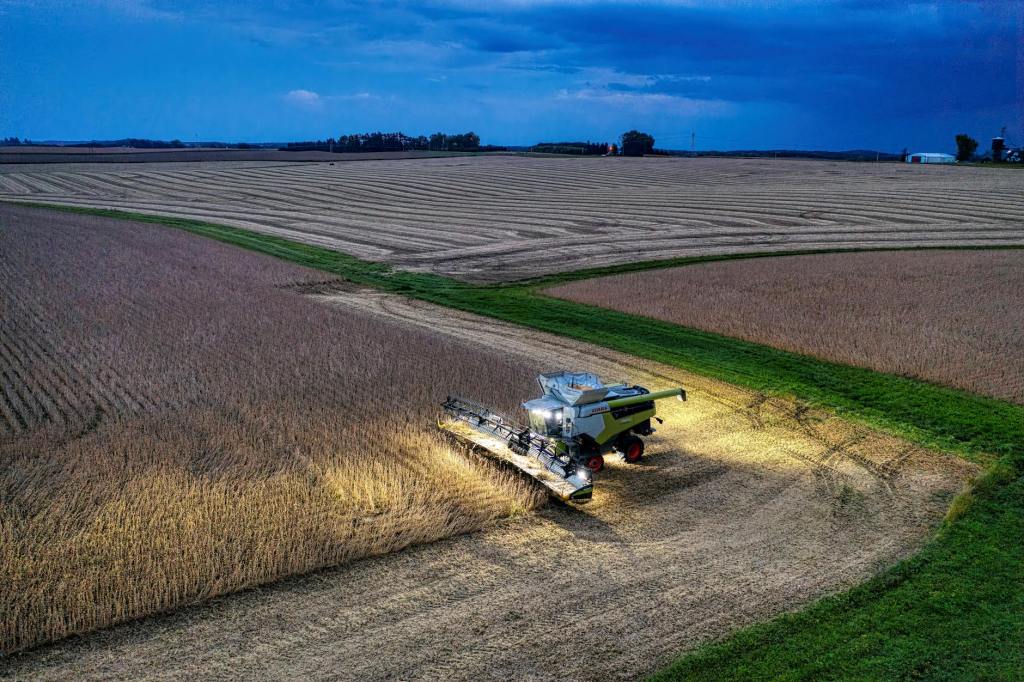
China trades for a lot of soybeans. In 2023 alone, the country imported over 87 billion kilograms of soybeans, equivalent to more than $ 59 million in value. The country relies on Brazil for most of its product, but the US, Argentina, Canada, and the Russian Federation also provide significant amounts of beans for the country.
For American soybean farmers, China is the majority buyer of their crops. However, with harvest season just around the corner, China is looking favorably south to Brazil for its exports. The US-China trade war initiated by President Trump has led American-grown crops to be too expensive compared to other options.
Farms across America are left waiting to see what becomes of their record harvests of soybeans. If tariffs and trade deals aren’t renegotiated, prices on beans may fall 40%, potentially cutting the farmers’ paychecks in half. Barely any of the crop is sold stateside, so for places like Wisconsin (in which soybeans are the state’s second biggest crop) and other Midwestern states, there may be nowhere for the beans to go.
There are two popular beliefs about this issue; the first is that President Trump is using tariffs as a bargaining chip and, even if harvests are poor financially this year, soon his leverage over China will lead to a return to norm (if not record profits), the second being that tariffs rarely lead to good outcomes, and farmers will continue to suffer if the tariffs aren’t lifted. While some farmers are worried, the sector heavily favored Trump in the last election, and many believe that the tariffs will take time to work, as the President said.
Economists have a more cynical view of the trade war—many believe that the entire situation is also to blame for farm economics. The prices of fertilizer and equipment are much higher due to tariffs on other countries, such as Canada. And China’s massive leverage as a country with so many exports Americans rely on makes it less likely they’ll come to the table to negotiate a more favorable deal for the US. Furthermore, Americans contribute a lot of soybeans to China’s imports. Still, a vast majority come from other countries, which realistically could fill the void of American beans in the next few years.
As the harvest draws nearer, faith in the President will be tested—could subsidies be handed out to weather the first year before the prosperity he promised? Or will China be unwilling to buy soybeans, leading farmers to lose precious dollars and potentially begin a major farming crisis? Economists and farmers can speculate on other options, but nothing can be sure until the farmers start to collect the soybeans.
Much of the nation is unaware of the issues faced by specific sectors of farmers. Yet, the soybean may become a critical test for the President to decide how farmers will be benefited or hurt under the new administration.
Sources
- https://wits.worldbank.org/trade/comtrade/en/country/CHN/year/2023/tradeflow/Imports/partner/ALL/product/120100
- https://www.usatoday.com/story/money/2025/09/15/farmers-corn-soybean-economic-pressures-profits/86091737007/
- https://www.bbc.com/news/articles/cjedvwed1xgo
- https://www.wboc.com/news/delmarva-soybean-farmers-sound-the-alarm-on-tariffs/article_1f8dfa32-4335-4d82-9960-3d7f3bf44137.html
- https://www.wbay.com/2025/09/17/interview-wisconsins-soybean-farmers-grapple-with-us-china-negotiations-harvest-nears/