


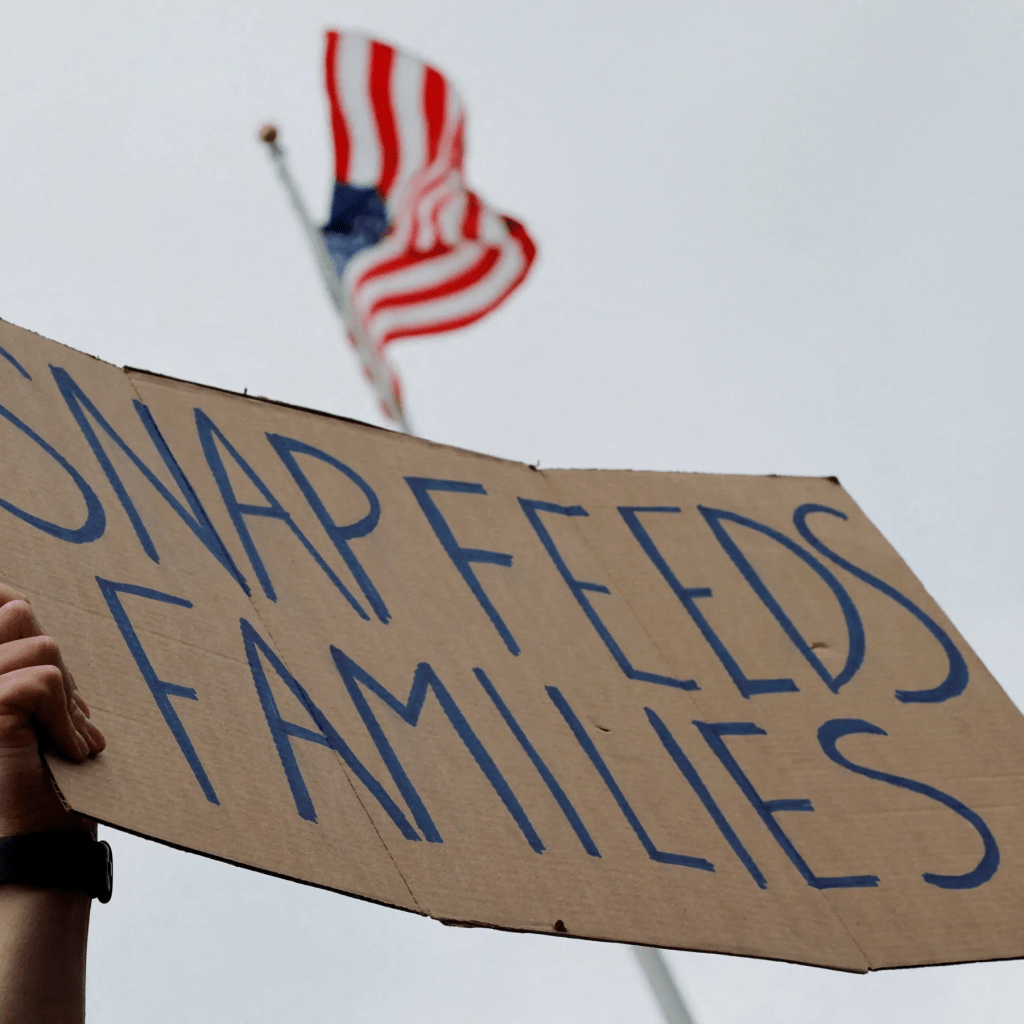
The Supplemental Nutrition Assistance Program, or SNAP (also known as the Food Stamp Program or just food stamps), is a federal program that provides essential, nutritionally viable foods for low-income families. As of 2025, around 42 million Americans (around 1 in 8) utilize this program to be able to gain access to nutritious foods. Because of the amount of people on the program, it costs around 8 billion a month to function.
The benefits of SNAP through the nutritious foods it provides has been proven to be invaluable, especially for families in poverty. Numerous studies have found that children participating in SNAP had, overall, more positive health outcomes in terms of rates of suicide, obesity rates, cognitive aging, and physical attributes. Furthermore, psychological and mental health for children and adults alike have shown more positive outcomes with low-income SNAP users versus non-users.
Eligibility for SNAP is typically measured by income. Generally, applicants must be at or under 130% of the federal poverty line in gross income, or at or under the poverty line for net income. Subsequently, families are issued an electronic benefit transfer (EBT) card, which is utilized as a debit card and is preloaded with a certain amount of money, determined by household size and income, at the beginning of each month. The average monthly payment was around $332 in 2023.
As per official USDA guidelines, a SNAP card can buy:
- “Fruits and vegetables;
- Meat, poultry, and fish;
- Dairy products;
- Breads and cereals;
- Other foods such as snack foods and non-alcoholic beverages; and
- Seeds and plants, which produce food for the household to eat.”
The Timeline:
October 1, 2025: The federal government shutdown becomes the result of the congressional failure to pass a budget for the fiscal year 2026. Many federal workers and programs begin to run out of money, resulting in deficits and furloughs.
October 10, 2025: The United States Department of Agriculture (USDA), the federal department that facilitates, leads, and runs SNAP, states that due to the shutdown, SNAP would eventually run out of money to continue to be funded.
October 26, 2025: As the federal shutdown persists, the USDA announces that starting November 1, all SNAP benefits would be cut due to continued funding shortfalls.
October 31, 2025: Two federal judges, in Massachusetts and Rhode Island, rule almost simultaneously that funding to SNAP must continue, regardless of the shutdown. They order the USDA to use its contingency funds for the time being.
November 1, 2025: Funding from SNAP is at risk of not being issued, and electronic benefit transfers (EBTs) do not occur throughout the United States.
November 3, 2025: As a result of the two rulings from October 31, the Trump administration in conjunction with the USDA agree to partially continue funding for SNAP through contingency funds. These funds are only able to pay for 50% of original benefits, or around $4.65 billion for the month of November.
November 4, 2025: President Trump posts online that, “SNAP benefits will be given only when the Radical Left Democrats open up government, which they can easily do, and not before!” This signals the potential for the long-term reduction of SNAP benefits should the shutdown continue and if congressional divisions remain.
Moving Forward in the Government Shutdown and the Economy:
As the federal government shutdown continues to persist as a national issue of congressional division, gridlock, and filibuster, turmoil with SNAP is likely to continue with battles inside the legislative branch. For now, the USDA must rely on its contingency funds to be able to cover half of the monetary amount of SNAP benefits.
The situation with the revocation of SNAP benefits for millions of Americans has illustrated the realities of the impacts of the shutdown, especially when coupled with furloughs, airline delays, and other governmental discrepancies as a result of it. Furthermore, it being a key focal point of the shutdown symbolizes the ideological battleground between Republicans and Democrats, with the former emphasizing lower spending to protect fiscal integrity and the latter underscoring the importance of SNAP (alongside other federal programs) as intrinsic to the social safety net.
Even further, because SNAP benefits are immediately injected back into the economy (with every $1 resulting in $1.50 to $1.80 in local economies), there are microeconomic shocks associated with such a shutdown. As revenue and gross product decline, so does profit, worker hours, and long-term fiscal sustainability. In short, even though the government can afford to grapple in turmoil for some time, as demonstrated by the shutdown, families and businesses cannot.
Sources:
https://apnews.com/article/snap-shutdown-lawsuits-deadline-4af8b0dec6cd31cddd023cc99c131b73
https://www.fns.usda.gov/snap/eligible-food-items
https://dhs.georgia.gov/update-november-snap-amid-federal-government-shutdown