
In May 2025, after years of tension and diplomatic stand-offs, the British Prime Minister, Keir Starmer, and the president of the European Commission, Ursula von der Leyen, met in London to achieve a reset for the UK–EU relationship. This handshake was more than symbolic, marking an attempt to move past the effects of Brexit and liberalize sovereign values to enter a more cooperative phase. To understand how we got here, we need to revisit why Brexit happened, how the relationship has evolved, and what the May 2025 summit signals for the future.
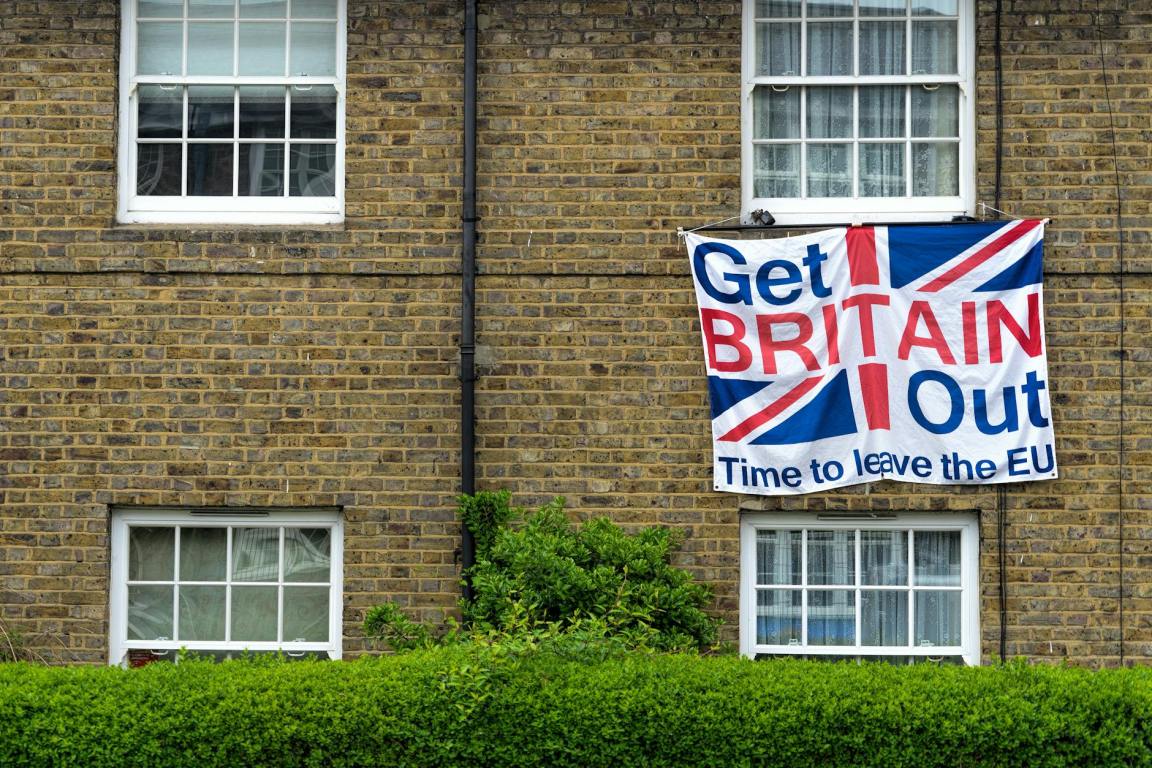
Firstly, it’s important to understand the grounds for why the 2016 Referendum happened, and the reasons for its ultimate turnout. In 2013, the British Prime Minister, David Cameron, pledged to hold a referendum on whether or not the U.K. should remain a member of the EU. This was an act to respond to growing Euroscepticism within his Conservative Party (Wallenfeldt). The subsequent event? A national plebiscite in 2016, ending in a 52% majority vote to leave the European Union. Four years later, on January 1st of 2020, the United Kingdom formally exited the EU, which was known as Brexit. The ‘Leave campaigners’ argued that by reclaiming its own national sovereignty, it is able to manage its immigration laws to reflect its domestic views, liberate itself from various rules and regulations, and can spark additional dynamic growth (McBride).
However, the arguments presented by these advocates conflicted with the opinions of the 48% that wished to remain in the EU. They asserted that leaving the EU rendered and further promoted economic instability, as the UK lost direct access to its largest trading partner. Additionally, there was a prominent fear that Brexit could end up fueling various nationalist movements, especially in areas like Scotland (McBride). But regardless of stance, a compelling question arose; can the UK and the EU find a more cooperative footing again?
This is where the acts following Brexit, designed to moderate the initial austerity, are essential to look at. After the Brexit transition period ended, on December 30th of 2020, both the UK and the EU signed three key agreements. These would all go into effect on May 1st of 2021. The Trade & Cooperation Agreement sought to ease trade friction and socioeconomic dilemmas, and allowed continued participation of select EU programmes. The Security of Information Agreement enabled cooperative exchanges of classified information to deal with ‘common security threats’. And finally, the agreement for cooperation on the safe and peaceful uses of nuclear energy further enhanced cooperation regarding the usage of and the standards regulating nuclear ordnance (European Council). This agreement also allowed for data in relation to radiological particulars to be exchanged more freely. These were the first indicators of both entities adjusting their policies through formal negotiations.
Jumping forward in the timeline, in 2023, the British PM (Rishi Sunak) and president of the European Commission (Ursula von der Leyen) collaborated and agreed on what is known as the Windsor Framework. This establishment, in short, alleviates the previously rigid structure of the transmission of goods and services from Great Britain to Northern Ireland, and places various economic buffers to insulate the EU single market (European Council). Furthermore, in all 27 EU member states, representatives asserted that they wanted to ‘develop further ties between the EU and the UK’ (O’Carroll). This demonstrated the evolving relationship between London and Brussels, signaling a clear shift in attitudes and policies alike. Now while disputes lingered, these influential powers within the EU expressing their desire to ‘reset relations with the UK’ indicated a turning point in intent.
This brings us back to where we started: May 19th, 2025. This day was a huge step forward for building synergy, coaction regarding policies, and creating a bilateral action plan. There are many key takeaways from this summit which not only interpreted new frameworks for various regulations, but aligned approaches to international affairs and issues. First, it outlined the need to focus on improving coordination with regards to security and safety. This includes maritime protection, managing migration, and mitigation of threats. It will be achieved by further coordination in the judicial systems in relation to civil and political matters. Second, both entities discussed the upgrading of capacities to mitigate risks and crises in relation to the health welfare systems. Third, the UK and the EU wished to strengthen their respective economies whilst ensuring the safety of our planet and the resources available. Finally, and most importantly, both institutions prioritized putting people at the forefront of the correspondence between the United Kingdom and the European Union (GOV.UK).
Brexit was driven by sovereignty, regulation, immigration, and Euroscepticism, and the split has left a rather interesting relationship of both divergence and cooperation. The May 2025 summit was indeed a milestone in furthering the common ground, but it ultimately is a reset, not a reversal. The future will depend on implementation, political motives, and how both sides will manage in times of diplomatic tension and political compromise. There’s always changes and disruptions in the global, regional, and local timeline in relation to the economy and political situations. So, will this new chapter be different? Will both sides be able to balance autonomy and partnership in this changing global environment? And, what new forms of collaboration are awaiting us in the coming years?
Works Cited
Wallenfeldt, Jeff. “Brexit | Meaning, Referendum, Date, and Consequences.” Encyclopedia Britannica, 1 Oct. 2025, www.britannica.com/topic/Brexit.
Accessed 30 September 2025
McBride, James. “What Brexit Means.” Council on Foreign Relations, 22 July 2019, www.cfr.org/backgrounder/what-brexit-means.
Accessed 30 September 2025
“Post Brexit Agreements.” European Council, 28 May 2025,
https://www.consilium.europa.eu/en/policies/post-brexit-agreements
Accessed 1 October 2025
O’Carroll, Lisa. “EU Ambassadors Set Out Hopes for post-Brexit Relations With Britain.” The Guardian, www.theguardian.com/politics/2023/may/08/eu-leaders-set-out-hopes-for-post-brexit-relations-with-britain.
Accessed 1 October 2025
“Windsor Framework Explained.” European Council, 28 May 2025
https://www.consilium.europa.eu/en/policies/windsor-framework-explained
Accessed 1 October 2025
“UK-EU Summit – Common Understanding (HTML).” GOV.UK, 19 May 2025, www.gov.uk/government/publications/ukeu-summit-key-documentation/uk-eu-summit-common-understanding-html.
Accessed 1 October 2025

VARUN VIJAY
- VARUN VIJAY

- VARUN VIJAY

- VARUN VIJAY

- VARUN VIJAY
