
Note: The views shared in this article are the author’s own and do not necessarily represent the individual opinions of the other members of The City Voice.
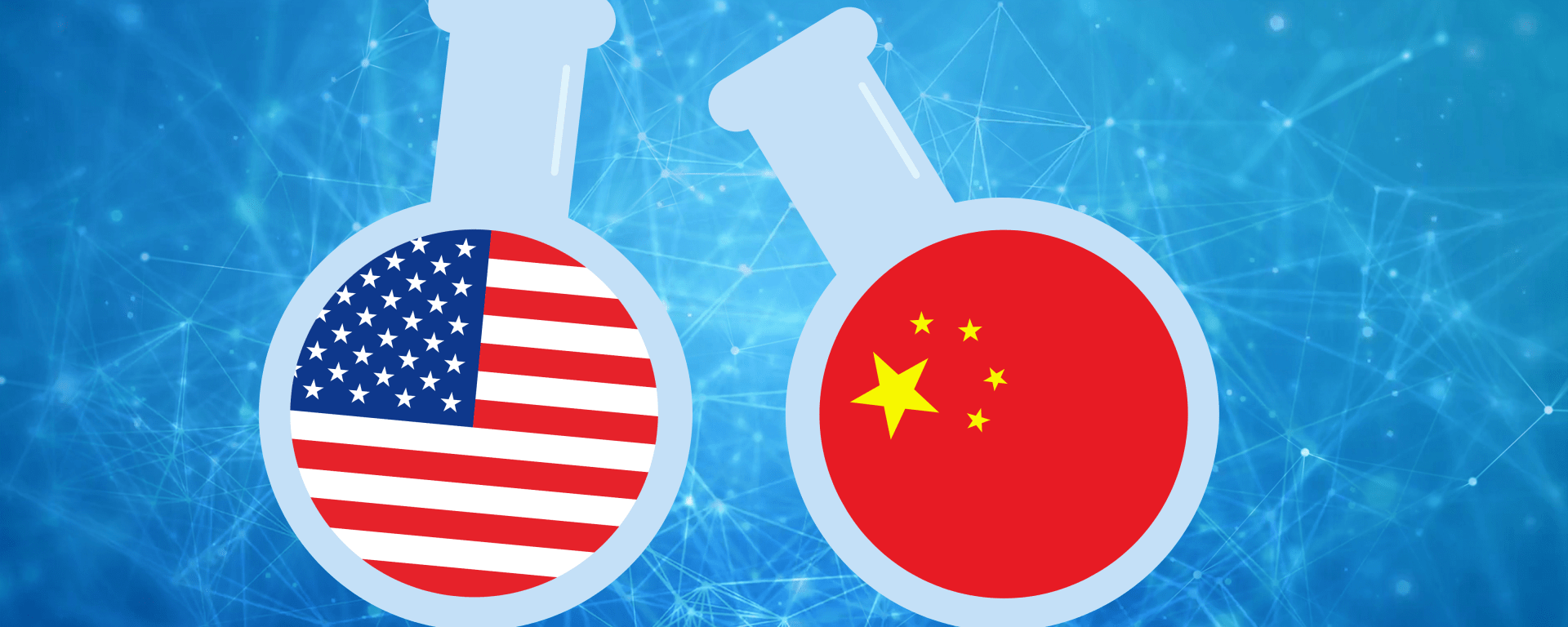
Science is one of, if not the, most important factors driving our society forwards. It is a great unifier, because science is, at its core, the same no matter where you are on earth. It is heartwarming to see a research paper cross country lines, knowing that people choose to work together to further us as a species. Unfortunately, though, we live in a world where we are incredibly divided, and it is obvious that while more research is being done, total collaboration between scientists in these politically divided countries is far less prevalent.
This paper will be looking at the most obvious case, which has ample data to show tensions do nothing but hinder scientific progress: U.S.-China tensions are very apparent, with neither country really trying to hide their hatred for one another. This has led to a rapid mitralization of Russia and an attempted remilitarization of the U.S., with both tentatively watching the Russo-Ukrainian War. This is seen in the Department of Defense’s spending in the last 4 years increasing from 1.28 trillion in 2020 to 1.94 trillion approved for 2024. That is a 35% increase that dwarfs the inflation increase of only 1.8%, showing a very clear increase in spending in the US military. While China tends to spend less overall funds on their military, only around 231 billion USD, it is believed that they are undercutting the amount they actually spend on the military – an estimate puts it closer to 471 billion. While there’s a probable chance their military spending is closer to that 400 billion mark, using officially reported numbers, there is still a 33% increase from 2020.

Despite a lack of data post-2022, there is a clear trend that social tensions are affecting article publishing. There was a vast rise in the amount of research papers between 2004 and 2020, then a gradual decline in the papers collaborated on (partially due to the pandemic). 2020 was also a turning point due to a Taiwanese president being reelected who is firmly against rejoining China. Also, his cabinet also holds strong ties with America.
This is indeed very concerning, as it could potentially lead to a second Cold War (or worse). The rising tension between the two countries could cause direct war, or plunge the U.S. into a lot of proxy wars. However, I do believe that there is a way that we can repair relations. Historically, scientists helped the U.S. and USSR cooperate and aided in ending the Cold War. So, if we can improve the scientific communications through China and America, we may be able to promote unity and lower political tensions.
Works Cited
- https://www.usaspending.gov/agency/department-of-defense?fy=2024
- https://www.cnbc.com/2024/03/05/china-defense-budget-2024.html
- https://repositories.lib.utexas.edu/items/fcb784b7-9bd7-4b0f-9f92-f6bc0e8239ec
- https://yipinstitute.org/policy/a-history-of-tensions-in-the-taiwan-strait

SAM CORRADO
Hello, my name is Sam Corrado. I am a science and opinion writer for the City Voice. I run our social media and contribute ideas for others. Some of my interests include electronics and science. I am planning to go to college for chemistry and enjoy baking in my spare time.
- SAM CORRADO

- SAM CORRADO

- SAM CORRADO

- SAM CORRADO
- SAM CORRADO

- SAM CORRADO
- SAM CORRADO
