

Editor’s Note: This review contains spoilers of Nosferatu: A Symphony of Horror. Any opinions expressed in this review are the author’s own and do not necessarily reflect those of the City Voice.
Nosferatu: A Symphony of Horror faces a lot of criticism from most audiences. People find it to be corny, unoriginal, and even boring, but most of these criticisms stem from the fact that this film was created and released in the 1920’s. Cameras were near prehistoric, special effects barely worked, and sound wasn’t even developed yet.
Taking all of this into account, I love this movie. It’s a time capsule of sorts, capturing the issues and technology of the time. Sure, some aspects of this make the film uncomfortable but sometimes history portrays unorthodox ideas like that to modern audiences.
Nosferatu pioneered the use of colored film to add to the actual story, from telling the time of day to setting the mood of the scene just by adding some dye to the developing film. This, like other German Expressionism films, also pioneered the idea of letting actors act in a more contemporary way. In Nosferatu, actors were used to drive the story forward and shape the tone of the scene instead of being used as tools to create the comedic moments and elements of the overall film, like previous American films. Nosferatu is also a film that trusts its audience, which was something that wasn’t common in the film industry at that time. The story was complex and wasn’t explained to its audience. In modern movies this idea doesn’t seem novel. Many filmmakers expect their audience to be ready for the story and don’t waste time explaining what’s happening, but in the early 1900s this was near revolutionary.
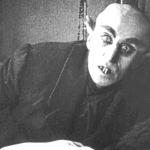
The story itself is almost identical to Bram Stoker’s Dracula: a beautiful woman is plagued with visions of a vampire trying to control her, as her husband is in direct danger from the count. While this parallel did not go unnoticed, Nosferatu expands on this idea more than the book or film adaptations were able to. The horror of Nosferatu, Count Orlok, brings with him plague and disease—a very real and terrifying threat. Orlok is able to control these viruses to some extent and use humanity’s fear to his own advantage, bringing the heroine closer to him until it’s almost too late. Nosferatu is able to bring real-life threats to the world he lives in. These are threats that the viewers (especially in the 1920’s) have most certainly faced. This fact brings a fear factor to the audience, almost putting them into the film itself.
The heroine also plays an active role in the film, something that was rare then and sometimes even rare now. Ellen, the woman pursued by Orlok, is ultimately the one to take down the vampire, completing a ritual that will destroy the creature once and for all. Ellen and her husband, Thomas, are shown to be romantic throughout their screen time together, creating a realistic atmosphere, once again adding to the strangeness of and fear in the film.
Knowing how groundbreaking this film was elevated my positive opinion on the movie. Understanding what exactly made this film a classic makes the entire thing more entertaining in my eyes. For me, knowing what had to go into this movie and what came before it reinforced the idea that this is a masterpiece and deserves its title of classic.

LINCOLN SCHNAARE
I’m Lincoln and I started at City in freshman year. I like to read and write, some of my interests include history, media, and media analysis. I like to craft - knitting and cross stitch are my best areas - and one of my favorite pastimes is casting the Muppets into different movies, TV shows, and books.
- LINCOLN SCHNAARE
- LINCOLN SCHNAARE
