
Overview
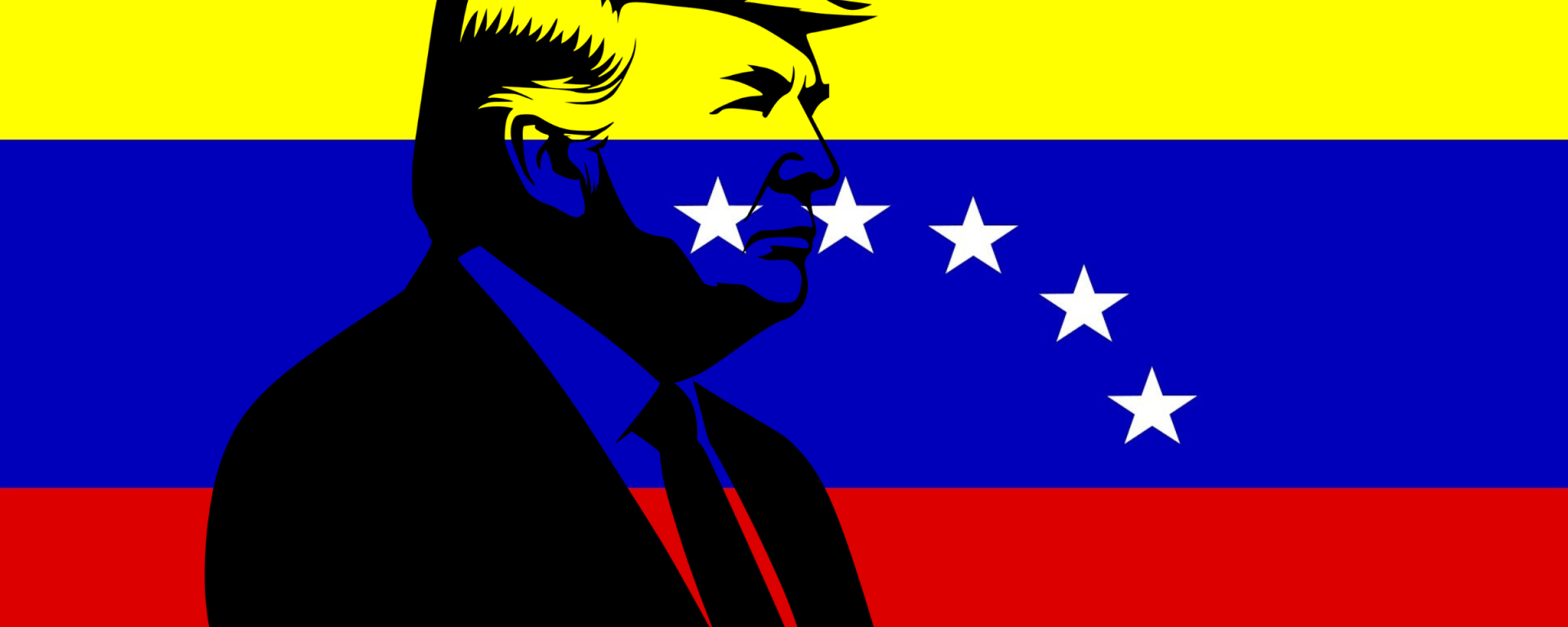
US intervention in and around Venezuela climaxed on the offset of the new year on January 3rd, where, in the early morning, a military strike on Caracas ensued. The US captured president Nicolas Maduro and his wife, Cilia Flores, bringing them to New York, who now await trial. The strike was extremely fast, lasting a mere 30 minutes total with seven strikes throughout the capital city.
The attack followed months of building pressure from the United States, which had, according to the Associated Press, “built up naval forces in the waters off South America and since early September has carried out deadly strikes on alleged drug-smuggling boats in the eastern Pacific and Caribbean.” The Trump administration’s justification has been narcoterrorism, which is now the charge Maduro faces alongside cocaine importation conspiracy, possession of machine guns and destructive devices, and conspiracy to possess machine guns and destructive devices.
President Donald Trump has said that the US will “run” Venezuela until a smooth transition process can occur. Delcy Rodriguez, vice president of Venezuela, has assumed power as the interim, and has quickly complied with Trump’s demands after his threats to further military intervention. Discussion of Maria Corina Machado (who recently won the Nobel Peace Prize and offered it to Trump), Venezuela’s opposition leader, leading the nation has been limited.
Venezuela’s oil infrastructure has also proven to be critical to the Trump administration, with Trump expecting for US oil companies to fix broken infrastructure – and reap the profits. He remarked at a news conference that “We’re going to get reimbursed for everything that we spend.” Although it is unclear what the US’ role in Venezuela’s oil industry will exactly be, it has been made apparent that Trump has taken a definite interest in it.
As the US takeover in the Latin American country continues into the latter part of January, the effects on Latin American politics will come into play, as described below.
Reinforcing Trump’s unpredictability
Diplomatically, the action itself was unprecedented by the international community. The Washington Office on Latin America noted that the strikes in Caracas were carried out without an official declaration of war, which raises questions about the legality and presence of Trump’s gunboat diplomacy and eventual escalation. In addition, the lack of congressional approval or checks and balances continue to enforce the unpredictability of the Trump administration.
The entirety of President Trump’s approach to the presidency is unpredictability. From tariffs to foreign policy, his agenda hinges on his persona of perceived randomness. It has seemed that his administration’s intervention in Venezuela has further embedded the belief in his turmoil.
Justin Logan, director of defense and foreign policy studies at the Cato Institute, writes that, “President Trump prides himself on being unpredictable, and this attack will only deepen other countries’ belief in the volatility of U.S. foreign policy.” This sets the stage for the remainder of the 47th president’s second and (most likely) final term.
Furthermore, ambiguous messaging from governments has shaped the unforeseeable intervention in Venezuela, exemplifying the state of current affairs. The US State Department issued an alert to American citizens in Venezuela, urging them to fly back to the US or elsewhere, now that flights from Venezuela have begun to restart. The justification is that armed members of the pro-regime militia, known as the colectivos, were beginning to set up roadblocks throughout the country.
The Venezuelan foreign ministry, conversely, issued an official statement to contradict the state’s warning, claiming that the alert was “based on fabricated accounts aimed at creating a perception of risk that does not exist.” The release of alerts and statements have come out of the confusion from Trump’s unpredictable strike in Caracas. Even beyond that, President Trump himself claimed that at some point “it’ll be safe.”
Diplomatically, the action itself was unprecedented by the international community. The Washington Office on Latin America noted that the strikes in Caracas were carried out without an official declaration of war, which raises questions about the legality and presence of Trump’s gunboat diplomacy and eventual escalation. In addition, the lack of congressional approval or checks and balances continue to enforce the unpredictability of the Trump administration.
Forcing alignment and cooperation with Trump’s goals
The Trump administration has repeatedly demonstrated its commitment to expanding its goals in the Western Hemisphere. The situation in Venezuela has proven this: because the government under Maduro didn’t immediately fall into submission under American hegemony, the US invaded. Specifically, allegations for drug trafficking in Venezuela countered Trump’s wishes, as it is a significant issue he aims to address in Latin America, prompting attack.
Alongside drug trafficking, Trump wishes to limit migration from the southern border and expand US influence in the Western Hemisphere, in a modern spinoff of the Monroe Doctrine. Action in Venezuela only takes this cause further: not only is the intervention a warning to the Venezuelan government, it is also a threat to the entirety of Latin America. Should nations that frequently oppose American actions not cooperate with the Trump administration’s goals, it has the possibility of facing the same fate as Venezuela.
Moreover, the intervention signals the importance of forced alignment from an economic standpoint as well. Trump has repeatedly demonstrated interest in Venezuela’s oil resources, as mentioned previously, which has also motivated the strikes in Caracas. This furthers the American narrative of enforced cooperation economically as well.
Fomenting polarization in the US and abroad
Latin American nations are divided in reaction to the intervention in Venezuela. Among them, the political right has vocalized support for Trump’s actions, with the most notable being Maria Corina Machado, Venezuela’s opposition leader. Other proponents include the leaders of Argentina, Ecuador, Trinidad and Tobago, Guyana, and Paraguay. On the other hand, left-wing leaders from Brazil, Colombia, Mexico, and Chile (with its outgoing president opposing and incumbent supporting). In fact, the four nations, along with Uruguay and Spain, released a joint statement condemning the Trump administration’s actions in Venezuela. Other nations, namely Bolivia, Canada, Guatemala, and Peru, released statements that signaled a cautious neutrality and an emphasis on democracy and international law.
Historically, the Western Hemisphere has been divided on issues concerning the economy, political ideologies, and US presence, and the current situation only exacerbates this issue. As Latin America continues to grapple with expanding US power, the effects of constant division will become apparent. An emergency Community of Latin American and Caribbean States (CELAC) meeting on January 4th on US intervention came to no consensus because of sharpened polarization.
Even further, a study from Cambridge University on Latin American politics notes that recent polarization weakens trust in government institutions and erodes democratic norms, especially with outside intervention (like the one from the US). This is because the intervention amplifies already existing divisions, which escalates the corrosion of democracy.
Domestically, US politics have also faced a divide between Republicans and Democrats, an already fueled political battle. In addition, the intervention has also shifted some Republican opinion away from Trump. All Democrats and Republicans Rand Paul of Kentucky, Lisa Murkowski of Alaska, Susan Collins of Maine, Josh Hawley of Missouri, and Todd Young of Indiana voted for a resolution in the Senate to require congressional approval before further action in Venezuela. Although the measure is unlikely to pass due to the presidential power to veto, it still symbolizes the gradual shift away from MAGA loyalty within the GOP. However, the Republicans that still stood by Trump have clashed with Democrats in Congress, continuing the already existing animosity between the two rival parties.
Globally, the Trump administration’s actions in Venezuela drove much international criticism and calls for a deescalation. The EU released a joint statement calling for peace and the restoration of democracy in Venezuela, condemning the use of military force, but also recognizing their longtime rejection of Nicolas Maduro’s presidency. Furthermore, Switzerland froze all of Maduro’s assets in Swiss banks for four years on January 5th. China and Russia both condemned intervention, with one Chinese representative stating that, “No country can act as the world’s police.” These two nations, after a request from Colombia, joined together with the Latin American nation for an emergency UN Security Council meeting to discuss the situation in Venezuela. However, much like the CELAC meeting, not much progress was made due to international polarization and opposition.
Setting the precedent for the “Donroe Doctrine”
In the November 2025 White House National Security Strategy, President Trump outlined the Trump Corollary to the Monroe Doctrine. This corollary declared the right of the United States to intervene in the Western Hemisphere as it wishes to reassert its dominance and international hegemony. According to Trump in the strategy brief, “After years of neglect, the United States will reassert and enforce the Monroe Doctrine to restore American preeminence in the Western Hemisphere, and to protect our homeland and our access to key geographies throughout the region.” This modern amalgamation of common administrative priorities became nicknamed the “Donroe Doctrine.”
Never before has American intervention been so decisive in the region in the 21st century. The strikes in Venezuela have sent a rippling effect throughout the Americas, showing exactly the extent the Trump administration is willing to go to to assert its power. This contrasts sharply with previous administrations, which have typically employed the softer notes of traditional diplomacy and light military force. Trump, on the other hand, has resorted straight to military spending and power.
US action in Venezuela also has a global effect. Alexander B. Gray, a political science expert on the Atlantic Council notes that, “[US intervention in Venezuela] is a global reestablishment of deterrence that will be seen in Beijing and Moscow as an unambiguous sign of the Trump administration’s commitment to a security order compatible with American interests.” China and Russia, longtime opponents of the US and especially Donald Trump, face a signal that reinforces American power in the Western Hemisphere, furthering the cause of the Trump Corollary.
However, the situation in Venezuela could also embolden China and Russia, among other nations, to show analogous behavior through reasserting their dominance in their respective geopolitical spheres of influence. Decades of post-Cold War restraint could be broken in the next few years, recalibrating global politics and destabilizing them entirely, according to experts from the Think Tank Journal.
Conclusion
US intervention in Venezuela could have destabilizing effects throughout the globe, reinforcing powers politically, economically, and militarily. Meanwhile, it sends a message to Latin American nations, reinforces American unpredictability, creates further polarization domestically and globally, and sets the precedent for the Trump Corollary. It will be crucial to prioritize peace for the Venezuelan people, the protection of democratic institutions, and the restoration of international norms and standards.
References
- https://apnews.com/article/venezuela-us-maduro-what-to-know-a57528ff315a7f70ed51a1721f5e0bc2
- https://www.msn.com/en-us/news/politics/sanders-trump-admin-running-venezuela-old-fashioned-imperialism/ar-AA1TQ0fx?ocid=BingNewsSerp
- https://www.theguardian.com/us-news/2026/jan/10/us-citizens-venezuela-paramilitaries
- https://www.politico.com/news/magazine/2026/01/04/us-venezuela-maduro-predictions-analysis-00710030
- https://www.as-coa.org/articles/reactions-us-operation-venezuela-latin-america-and-beyond
- https://www.politico.com/live-updates/2026/01/08/congress/the-5-republicans-who-voted-against-trump-on-war-powers-00716245
- https://www.cambridge.org/core/journals/latin-american-politics-and-society/article/latin-americas-polarization-in-comparative-perspective/D121017EDA82C92BC42794D15BC910E9https://colombiaone.com/2026/01/05/celac-meeting-us-intervention-venezuela-ends-without-consensus/https://www.atlanticcouncil.org/dispatches/us-just-captured-maduro-whats-next-for-venezuela-and-the-region/
- https://nycfpa.org/09/03/drug-wars-or-proxy-conflicts-geopolitical-stakes-in-us-venezuela-operations/
- https://theconversation.com/trumps-new-world-order-is-taking-shape-in-venezuela-five-keys-to-understanding-the-us-military-attacks-272673
- https://thinktank.pk/2025/11/03/global-south-on-alert-will-us-venezuela-tensions-redraw-the-world-map/
- https://www.whitehouse.gov/wp-content/uploads/2025/12/2025-National-Security-Strategy.pdf
AYAN SHUKLA
Ayan is the managing editor of the City Voice, and a current freshman at City High Middle. He primarily writes articles about the economy, politics, and global current events and won first place in his category in the 2025 MIPA awards. He is part of Speech and Debate, the NHS Executive Board, President of the Class of 2029, MYIG, MUN, Student Ambassadors, and started the Michigan branch of a nonprofit organization.
In his free time, Ayan enjoys playing the piano and the violin, reading, and excessively drinking coffee. You can contact him atshukla-a@students.grps.orgfor any questions about his articles.
- AYAN SHUKLA
- AYAN SHUKLA
- AYAN SHUKLA

- AYAN SHUKLA

- AYAN SHUKLA
- AYAN SHUKLA
- AYAN SHUKLA
- AYAN SHUKLA
