
Editor’s Note: This has spoilers for both films Ne Zha and Ne Zha 2, both of which are unrated, though they include mature topics including suicidal themes, so read at your own discretion. Any opinions expressed in City Voice articles are the authors and do not necessarily reflect those of the City Voice.
The Chinese fantasy film Ne Zha 2 broke records after its release on Lunar New Year. Generating 1.69 billion USD, the film surpassed Inside Out 2 at the box office and became the highest-grossing animated film in the world. It is also currently the 8th highest-grossing film of all time. However, most profits were generated from the Chinese market, which is different from conventional Hollywood blockbusters. The international community, and specifically the leading movie market, the US, is not highly aware of this new film. However, the film is gaining attention among international movie lovers, which is no surprise. Ne Zha 2 is the sequel of an already very successful film, Ne Zha, released in 2019. Ne Zha 2 is a raw, stunning, and epic movie that shines compared to the Hollywood movies being produced now.
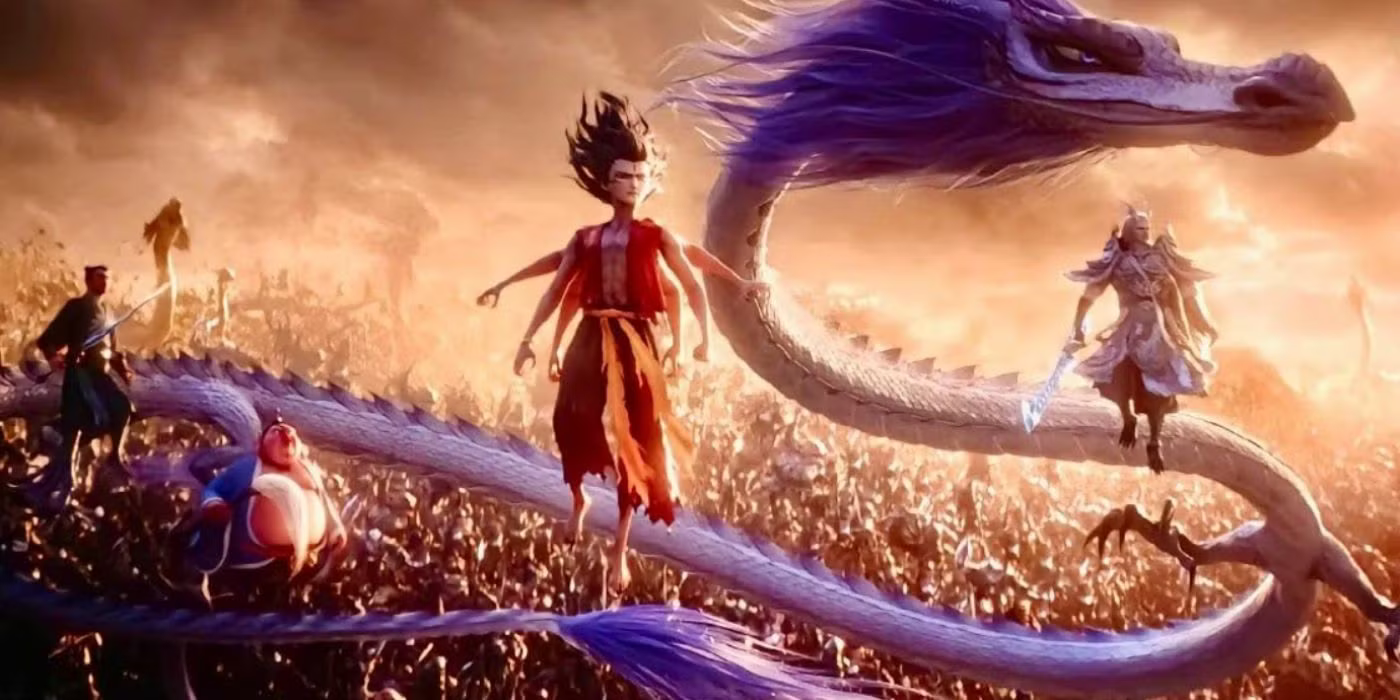
While many people on the internet focus on the immense profits and records broken by Ne Zha 2, people forget to understand why this movie became so popular in the first place. The audience score on Rotten Tomatoes for Ne Zha 2 is at 99% which is a good indicator that the film was not just a cash grab, but a poignant movie that resonated with moviegoers. And before diving into the thematic and plot elements of this movie, it is critical to note that the animation of this movie is splendid. The details on these characters are profound, and the fight scenes are some of the best cinematography I have ever seen. Every motion is dynamic and expressive and contains so much power in every scene. It truly feels like witnessing a real, brutal, and epic battle every time the characters fight.

The Ne Zha movies center around a titular ancient Chinese folktale boy deity. In the ancient legend, Ne Zha was destined to assist in creating the Zhou Dynasty and to protect Chengtang Pass. However, Ne Zha wielded great power and caused havoc, killing the Dragon King’s son, Ao Bing, and angering the Dragons. The Dragons came for Ne Zha’s parents, so Ne Zha ends up killing himself to save his family, gifting his body parts to his parents. However, Ne Zha’s mother attempts to build a resurrection for him, but Ne Zha’s dad destroys it, upset with all the chaos Ne Zha caused. In the original legend, Ne Zha and his father have a bitter relationship which is different from the modern movies. However, the component of Ne Zha that always stays consistent is Ne Zha’s rash but selfless nature, and his guilt and obligation towards his family.
In the Ne Zha movies, Chinese filmmakers took this ancient tale and added a modern spin to it, creating a fantastical yet emotionally deep movie. While also focusing on Ne Zha’s feelings of obligation and guilt toward his family, the movies focus on identity and oppression. In these movies, Ne Zha’s parents are selfless and show unwavering care for Ne Zha.
Ne Zha is born from an orb created from heaven. The orb was split into the Spirit Pearl and the Demon Orb, and the two were switched, wrongfully giving the Spirit Pearl to Ao Bing and the Demon Orb to Ne Zha. The person receiving the Demon Orb would be killed by the Wrath of Heaven three years after their birth. Ne Zha’s insecurities stem from receiving and possessing demonic powers from the orb. While his parents are supportive and caring, Chengtang Pass condemns Ne Zha, shaming, fearing, and separating him from the community. Ne Zha’s oppression from the town paired with his guilt from his rash tendencies from the Demon Orb result in him feeling an immense obligation and guilt for his family. Thus, when the Wrath of Heaven comes, he is ready to go. Another interesting note is that Ne Zha is enemies with Ao Bing this is the first film, but later they become allies, fighting off the Wrath of Heaven together. This is different from the original legend and shows that differing identities can form great companionships.
The first movie lays the groundwork for Ne Zha’s characterization and his feelings surrounding familial obligations, identity, and guilt. The second movie dives deep, unpacks, and analyzes the concept of identity and oppression and offers an introspective view of them, almost in the likes of Arcane’s cinematic intelligence.
The exploration of identity in Ne Zha 2 is very allegorical, however, viewers like me could relate to the very human struggles that Ne Zha faces. He is born different from everyone else due to the Demon Orb. While his talents and powers are impressive for combat, his rash tendencies and demonic energy result in him facing stigma in both the divine world and the townspeople. This is a crisis for Ne Zha, and while he tries to mask his feelings through humor in the movie, his wounds are there. Ne Zha is never comfortable with truly revealing his demonic identity. When he does reveal his powers, he does it out of rebellion. He sometimes wishes for brutality and violence as he feels that is the only thing he is capable of. Thus, Ne Zha has a tumultuous relationship with himself, disgusted at times by the gifts the demon orb gave him. At times he wishes he was not the way he was, which is disheartening. He feels that his identity is mainly taken over by his unfortunate circumstance of accepting the demon orb. This overshadows his other redeeming traits, such as his goofiness, selflessness, and his bravery. Therefore, his sense of identity is warped by his predispositions and he feels that he cannot create a new identity to escape his demonic traits.
Ne Zha’s identity causes him to be oppressed by both divine and common people. The divine god, Wuliang, who is benevolent at first and meant to assist Ne Zha and his friends, turns out to be a corrupt leader of heaven (a well-written twist villain, by the way). He wishes to keep his sect his way and craves power. He manipulates people and oppresses and kills those he views as different. This is an allegory for corrupt leaders, and Wuliang is a catalyst of oppression in this film. An example of this is when Ne Zha completes heavenly trials from Wuliang to save his friend Ao Bing, Ne Zha is asked to suppress his power, and instead allow the spirit of Ao Bing to control him since Ao Bing possesses the Spirit Pearl. This is similar to many individuals who are stigmatized for their differences. They are forced to oppress them when talking to others of higher power, otherwise they face repercussions. Ao Bing serves as the ‘favorable standard’ in society. He is seen as perfect as he was swapped with the Spirit Pearl. While Ne Zha and Ao Bing are close friends in the second movie, Ne Zha cannot help but feel resentment towards Ao Bing’s ‘perfectness’ according to society and condemns his praise while he receives reprimands about his behavior and looks. However, both characters indeed face oppression as Ao Bing is a dragon who takes the form of a human to appear more approachable. Dragons are also oppressed by Wuliang, living in poor conditions because he does not like them. Ne Zha is a demon condemned by heaven and the people, so he is oppressed by Wuliang and heaven.
Ne Zha struggles with identity and oppression, but his family who loves him dearly despite his demonic characteristics, results in him feeling immense guilt and self-hatred for who he is. During a scene when his parents come to protect him when he’s trying to fight Wuliang, a seemingly good at first but then corrupt leader of heaven, Ne Zha willingly tries to sacrifice himself for his family. He feels that because of his identity, he has caused an immense burden for his parents. Thus, even though rash at times, everything Ne Zha does is for the sake of his parents and friends. When Ne Zha’s mom hugs him before she dies, Ne Zha says that he is useless, and all he has ever done is cause problems for his family. This was so bleak and disheartening for me because Ne Zha was still a boy who is a victim of heaven’s mistakes (switching the demon orb and spirit pearl), yet he blames himself for all the issues that arise in the films. As an older sister, although obviously not to Ne Zha’s degree, I could relate to his situation, making Ne Zha’s feelings very close to me.
It is a staple in Chinese culture to assist and repay your parents. However, a very admirable quality in this movie, at least for me, is Ne Zha’s parents giving him the space to express himself and reassure him that nothing about his identity has changed their love for them. There are multiple scenes of parental figures being emotionally available and nurturing for their children. Ao Bing’s father, Ao Guang, apologizes for trying to mold Ao Bing into the son he wants him to be. All parental figures later emphasize that ‘walking your own path’ is very important. This was unconventional to stereotypical Asian parents, but a detail I greatly appreciated as the film encourages unique identities, condemns oppression and allows for individuality and healthy parent-child bonds.
While many people are more invested in the box office records this film brings, I am invested in the story it brings. It is new and unconventional, paying homage to Chinese culture yet diverting from old Chinese social stereotypes and promoting empowering themes. Using an ancient Chinese god and making him relatable for modern audiences was genius as it resonates with many young Chinese people nowadays. Audiences are stunned by the prowess of this film. Sadly, the film is not well known in America due to American-Chinese political tensions. However, shedding light on this deep yet epic action movie will allow audiences around the world to understand more about struggles with identity, oppression, and familial obligation while enjoying beautiful animation and character designs along the way.
Works Cited
Jiaozi. Ne Zha Screenshot, 29 Jan. 2025, static0.srcdn.com/wordpress/wp-content/uploads/2025/02/ne-zha-2-screenshot-8.jpg. Accessed 18 Feb. 2025.
“Nezha.” Wikipedia, 15 Feb. 2022, en.wikipedia.org/wiki/Nezha.
Reuters Staff. “Chinese Film Nezha 2 Becomes Highest-Grossing Animated Film Globally.” Reuters, 18 Feb. 2025, http://www.reuters.com/lifestyle/chinese-film-nezha-2-becomes-highest-grossing-animated-film-globally-2025-02-18/. Accessed 18 Feb. 2025.

KENZIE LOW
- KENZIE LOW

- KENZIE LOW

- KENZIE LOW

- KENZIE LOW

- KENZIE LOW

- KENZIE LOW

- KENZIE LOW

- KENZIE LOW

- KENZIE LOW

- KENZIE LOW

- KENZIE LOW

- KENZIE LOW

- KENZIE LOW

- KENZIE LOW