

Editor’s Note: Any opinions expressed in City Voice articles are the authors and do not imply that the City Voice takes a stand one way or another.
“I did not write half of what I saw, for I knew I would not be believed.” With labored breaths, sprawled on his deathbed, the world-renowned 13th-century Italian explorer Marco Polo reminisced about his time on the Silk Road. As a traveler on the famous trade route that connected Europe with China and other Asian countries, he was one of many baffled merchants and explorers who viewed the extravagant pathway as an avant-garde concept—one that would forever change the course of history.
However, it seems that a modern-day revival of the commercial route has risen to prominence, and it could have far-reaching consequences for the entire world.
China’s current socioeconomic and geopolitical ambitions were officially set forth with a global infrastructure strategy known as the Belt and Road Initiative (BRI). In the fall of 2013, over a decade ago, Chinese President Xi Jinping announced this new policy to establish a “Silk Road Economic Belt” and a “21st-Century Maritime Silk Road”. After a preliminary planning phase with national governments, this vision was further expanded upon during a 2017 Belt and Road Forum that furnished a more elaborate, comprehensive plan.
Now, after approximately 11 years of Chinese involvement in various foreign economic and militaristic development efforts, the BRI has proven to be, arguably, the largest and most extensive infrastructure investment program in history. In just a short period of time, China has built economic ties with over 150 countries and international organizations, spanning over 5 billion people (a vast majority of the entire world’s population), and implemented ambitious, far-reaching projects in nearly all facets of infrastructure including transportation, government, telecommunication, and defense. It has spent well over $1 trillion on these investments, with experts predicting that China’s expenses for the entirety of the BRI could reach as much as $8 trillion.
Despite these substantial, pronounced benefits of China’s key foreign economic policy, the BRI has various setbacks. Its most glaring issue happens to be the one that could dictate its long-term efficacy as well. In one of the initial founding documents, the Chinese government explicitly emphasized the importance the BRI would have in “enhancing mutual understanding and trust” as well as “strengthening all-around exchanges”. Specifically, it called on countries to “work in concert” with each other; in fact, it focused on intergovernmental collaboration so much that the phrase “cooperation” is used 128 times in the aforementioned action plan.
Even so, after years of this project’s conception, the multilateral partnership that China had intended to achieve simply has not materialized. Rather, the implementation of the BRI has become a series of weak bilateral ties in which each country is economically linked with only China and doesn’t have a strong diplomatic alliance with the other participating nations. President Xi attempted to resolve this issue in 2023 by inviting several member states and organizations to the 3rd Belt and Road Forum hosted in Beijing. This, too, failed to strengthen the partnership between these wide-ranging nations, highlighting various awkward interactions between government officials who hardly knew each other and were present solely to engage with Chinese bureaucrats.
And while this problem has long been in the limelight due to the magnitude its effects will have on foreign policy for nearly every country, it also casts a shadow over an increasingly prevalent issue, one that could have even more significant consequences in the future. As China continues to escalate its construction efforts through the BRI, these projects have caused significant harm to the environment in ways that are not yet fully understood. The preliminary repercussions have started to emerge and, considering the unsustainable practices used by the Chinese government, are quite alarming for the future of conservation efforts.
The primary cause for these environmental problems is the mass construction that China has promoted through the BRI. In order to build at such an exorbitant rate, the Chinese government only added on to concerns about habitat loss by demolishing entire ecosystems, especially in areas that are already struggling to protect their environment. A 2017 report published by the World Wildlife Fund (WWF) found that the economic corridors that the BRI establishes with other nations “overlap with the range of 265 threatened species [and] 1,739 Important Bird Areas.” There have been several recorded instances of such disturbances, particularly with species that are on the brink of extinction.
For instance, Sinohydro, China’s state-owned hydropower company, planned to construct a $1.5 billion dam on the Indonesian island of Sumatra, a project that could gravely harm various species in the region including the critically endangered Sumatran orangutan. Although renowned professors and prominent activists wrote a letter to the Indonesian President in 2018 to convince him to cancel construction, their warning fell on deaf ears. As a result, not only has the Sumatran orangutan’s population been declining by 1,000 a year since 1998, but the people residing on the island have faced devastating ramifications for a decision they didn’t make. Due to soil erosion caused by the construction of the dam, landslides in the region have led to the deaths of at least three people. Similarly, Sinohydro spearheaded the controversial Koukoutamba dam in the West African country of Guinea. The construction is expected to cause the deaths of 1,500 critically endangered Western chimpanzees.
Consistently, China’s BRI projects continue to put profits and economic benefits over sustainable practices; this exhaustive habitat loss provokes enduring damage to ecologically sensitive regions and vulnerable species. With China expressing continued interest in expanding the BRI, this habitat destruction could lead to irreversible consequences. As the Environmental and Energy Study Institute warns, “Increasing interconnectivity in Eurasia through the initiative could mean dissecting these natural environments with miles and miles of roads and rails, and such disruptions would threaten the plants and animals of the surrounding ecosystems—as well as the livelihoods of the people who live there.” By disturbing the natural order, and the individuals who rely on it, China is only harming the earth with its blatant disregard for the environmental degradation fueled by the BRI.
In response to the negative publicity that the BRI has been receiving due to its detrimental implications on the environment, the Chinese government has attempted to rebrand its infrastructure projects as the “Green Silk Road”. However, much like its empty promises of economic success and prosperity to the citizens of BRI member nations, the Chinese government’s actions portray a completely different story. This practice is known as greenwashing, in which an organization or nation uses intentionally misleading labels or makes promises that are neglected in the actual implementation process.
In one example of China’s greenwashing, President Xi announced to the United Nations General Assembly in September 2021 that China will no longer build coal power plants overseas. Contrary to this commitment, at least two overseas coal projects were confirmed, and the Yale Review of International Studies found that Chinese banks “still finance over 70 percent of coal power plants in the world under the BRI”. Likewise, China established an initiative under the United Nations called The Belt and Road Initiative International Green Development Coalition (BRIGC) to create a façade masking its environmentally harmful intentions. Specifically, the Chinese government’s external BRI environmental policies rely on a non-binding approach rather than rely on a non-binding approach rather than instituting specific, enforceable regulation.
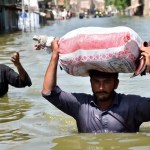
As these effects become increasingly prevalent and damaging to various communities, protests against these projects funded by China have gained momentum in BRI member countries. In 2019, residents of the Naryn province in Kygryzstan protested after a Chinese mining company mishandled toxic materials and poisoned local water supplies. Similarly, in August of 2021, demonstrations erupted in Pakistan after the Chinese-funded Gwadar port, a key project in the China-Pakistan Economic Corridor, left local citizens without access to water and electricity while threatening the area’s major fishing industry.
For far too long, these cries for help and protests for change have been overlooked and gone unheard by the Chinese government who view the BRI as a way to exploit the impoverished and vulnerable at the expense of the safety of the environment. It is time for Western nations, which hold powerful voices in the global community, to stand against China’s unsustainable practices because, at the end of the day, climate change does not abide by geopolitical borders. Even when China is the one fueling harm and detriment to the environment, the entire world suffers.
Sources:
https://english.www.gov.cn/archive/publications/2015/03/30/content_281475080249035.htm
https://www.wwf.org.hk/en/?19680/Feature-Story-WWF-and-Greening-the-Belt-and-Road-Initiative
https://www.theguardian.com/world/2022/sep/20/china-plan-green-silk-road-environmental-promises
https://www.iri.org/resources/environmental-implications-of-the-belt-and-road-initiative

KRISHNA MANO
- KRISHNA MANO

- KRISHNA MANO

- KRISHNA MANO

- KRISHNA MANO

- KRISHNA MANO

- KRISHNA MANO

- KRISHNA MANO

- KRISHNA MANO

- KRISHNA MANO
- KRISHNA MANO

- KRISHNA MANO

- KRISHNA MANO

- KRISHNA MANO

- KRISHNA MANO
- KRISHNA MANO

- KRISHNA MANO

- KRISHNA MANO

- KRISHNA MANO

- KRISHNA MANO

- KRISHNA MANO

- KRISHNA MANO

- KRISHNA MANO

- KRISHNA MANO

- KRISHNA MANO

- KRISHNA MANO

- KRISHNA MANO

- KRISHNA MANO

- KRISHNA MANO

- KRISHNA MANO

- KRISHNA MANO

- KRISHNA MANO
- KRISHNA MANO

- KRISHNA MANO

- KRISHNA MANO

- KRISHNA MANO

- KRISHNA MANO

- KRISHNA MANO
- KRISHNA MANO

- KRISHNA MANO

- KRISHNA MANO

- KRISHNA MANO

- KRISHNA MANO

- KRISHNA MANO

- KRISHNA MANO

- KRISHNA MANO
- KRISHNA MANO

- KRISHNA MANO

- KRISHNA MANO

- KRISHNA MANO

- KRISHNA MANO

- KRISHNA MANO

- KRISHNA MANO

- KRISHNA MANO

- KRISHNA MANO

- KRISHNA MANO

- KRISHNA MANO

- KRISHNA MANO

- KRISHNA MANO
- KRISHNA MANO

- KRISHNA MANO

- KRISHNA MANO
