
Editor’s Note: Any opinions expressed in City Voice articles are the authors’ own and do not necessarily reflect those of the City Voice.
I remember attending my first school board meeting a few years ago, when I was in fifth grade. Concerned parents from across the district, including my own mother, were voicing their opinions about a budget proposal that reduced funding for extracurricular activities. I had just become interested in the processes that run our local government and was eager to learn more about the rules that impacted my education.
With these high expectations in mind, I enjoyed every second of the board meeting (occasionally finding myself staring at the popcorn ceiling). However, after a few days, I asked my mom what came out of the budget discussions. Then, a few weeks. Months passed before we finally heard back from them with an unfavorable compromise that barely took our requests into consideration.
Unfortunately, my first experience with the governmental process is not uncommon for young Americans today. In fact, this has become Gen Z’s conventional, prevailing outlook towards how the government functions: sluggish, inefficient, and unresponsive to the needs of the people.
This downcast attitude translates into other facets of civil society, especially voter turnout. CIRCLE at Tufts University estimates that only 42% of young voters cast a ballot in the 2024 election cycle, compared to a 53% turnout rate in 2020. In general, a Harvard Youth Poll found that only 11% of Americans ages 18-29 feel that the United States is “generally headed in the right direction.”
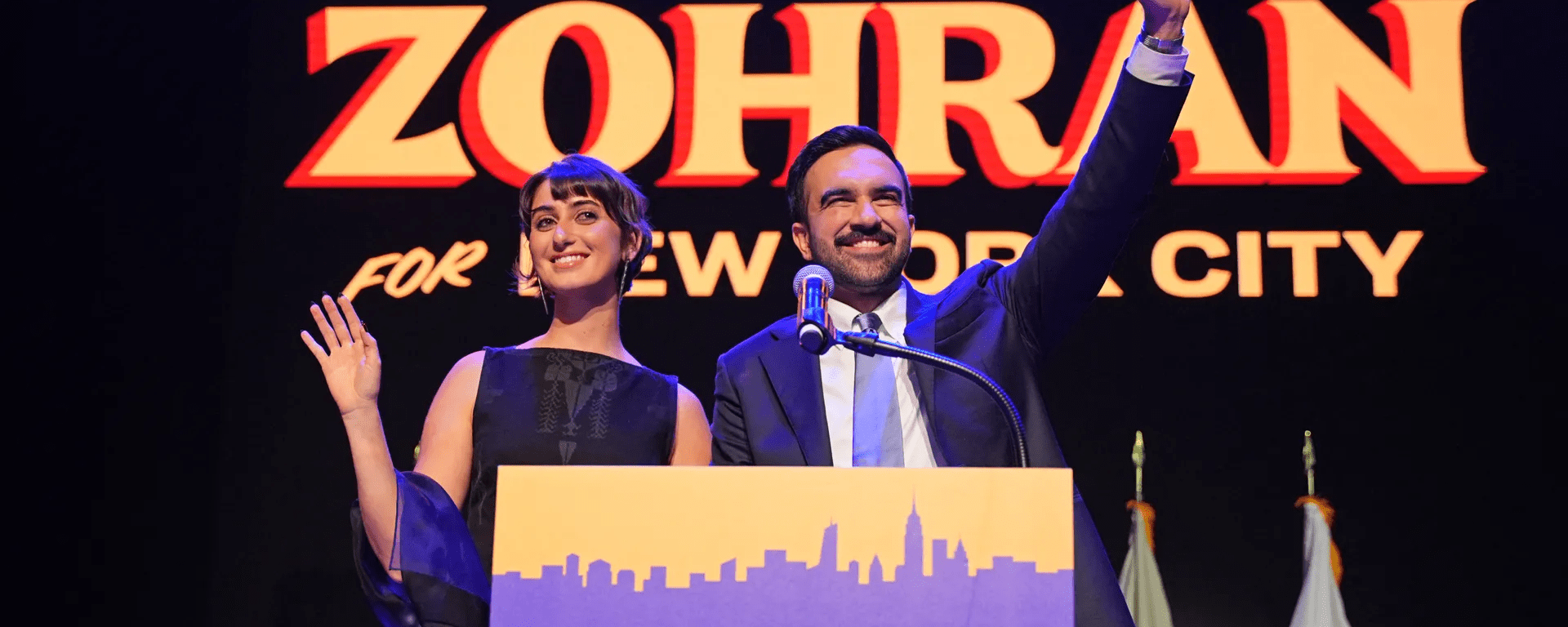
For a demographic that fails to see our priorities, interests, and hopes for the future reflected in politics, a campaign that organizes around issues that are important to us is a breath of fresh air. Better, yet, is when that campaign wins. For Gen Z, that breath of fresh air was Zohran Mamdani.
The 34-year-old state assemblyman went from polling at 1% just one year ago to securing over 50% of the vote in an election that drove over two million New Yorkers to the polls, the highest voter turnout since 1969. His populist agenda centers on uplifting the working class, promising rent stabilization, government-run grocery stores, and free public transportation. Millions of people hailing from across the country, especially young Americans, showed their overwhelming support for him in a race that would have otherwise been considered insignificant.
However, as one of the many young Americans invested in this election, I can assure you that the support isn’t necessarily attributed to his agenda. Transit advocates agree that subsidized bus fares will drain the funds necessary to improve the system. Unreasonably low prices at a municipal grocery store drives out private businesses and requires the city to raise taxes on residents. Rent control, if not executed properly, could decrease affordability and fuel gentrification in the long-term.
Rather, the widespread support for Mamdani stems from his belief in a world where American politics actually serves the people. His opponents in the race relied on donations from the wealthy minority who always pull political strings to have their way, while he led a grassroots effort backed by everyday New Yorkers who saw hope and a potential for change in his campaign. In less three months following the June primary elections, he raised money from 17,981 individual donors, of which a vast majority donated under $250, compared to just 759 individual donors for Andrew Cuomo, the independent candidate. When elected officials are expected to serve those who supported their candidacy, voters can be assured that Mamdani will serve the working class while Cuomo will be forced to serve the establishment.
Mamdani’s campaign represented an aim for a brighter future where all Americans, young and old, could have a say in the political process. It showed the world that the 26 billionaires who donated over $22 million to Mamdani’s opponents couldn’t erode the will of the people. And, ultimately, it demonstrated that the era of big money blocking progress in civil society was coming to a close. His victory was merely the realization of this dream.
In a political world where individual contributions have been dwarfed by PACs and multi-million dollar donations – where democracy has become a puppet show for the elite rather than a megaphone for the people – Mamdani showed us that this doesn’t always have to be true. With enough organizing and momentum, democracy can still thrive in the face of donations and dollar signs.
I am still too young to vote, but that doesn’t make me too young to care. As disheartened as I was after that school board meeting years ago, last night’s election showed me that it doesn’t have to be that way. The best way to channel the energy of young voters (and soon-to-be voters) is to follow in Zohran Mamdani’s footsteps and make it evident that no amount of money can diminish the importance of the ballot box and value of their voice. Moments like these help American democracy thrive.

KRISHNA MANO
- KRISHNA MANO

- KRISHNA MANO

- KRISHNA MANO

- KRISHNA MANO

- KRISHNA MANO

- KRISHNA MANO

- KRISHNA MANO

- KRISHNA MANO

- KRISHNA MANO

- KRISHNA MANO

- KRISHNA MANO

- KRISHNA MANO

- KRISHNA MANO

- KRISHNA MANO
- KRISHNA MANO

- KRISHNA MANO

- KRISHNA MANO

- KRISHNA MANO

- KRISHNA MANO

- KRISHNA MANO

- KRISHNA MANO

- KRISHNA MANO

- KRISHNA MANO

- KRISHNA MANO

- KRISHNA MANO

- KRISHNA MANO

- KRISHNA MANO

- KRISHNA MANO

- KRISHNA MANO

- KRISHNA MANO

- KRISHNA MANO
- KRISHNA MANO

- KRISHNA MANO

- KRISHNA MANO
- KRISHNA MANO

- KRISHNA MANO
- KRISHNA MANO

- KRISHNA MANO

- KRISHNA MANO

- KRISHNA MANO

- KRISHNA MANO

- KRISHNA MANO

- KRISHNA MANO

- KRISHNA MANO
- KRISHNA MANO

- KRISHNA MANO

- KRISHNA MANO

- KRISHNA MANO
- KRISHNA MANO

- KRISHNA MANO

- KRISHNA MANO

- KRISHNA MANO

- KRISHNA MANO

- KRISHNA MANO

- KRISHNA MANO

- KRISHNA MANO

- KRISHNA MANO

- KRISHNA MANO
- KRISHNA MANO

- KRISHNA MANO

- KRISHNA MANO
